PicrossBrowser-Based Nonogram Game & Solver Engine
Project Overview
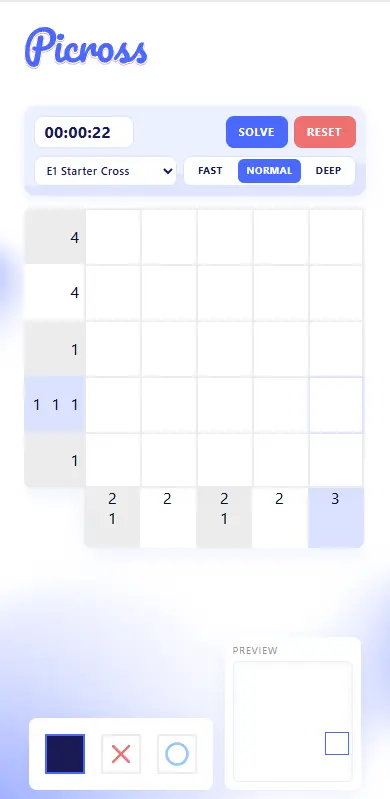
Picross is a browser-based nonogram puzzle game that combines a responsive frontend experience with a deterministic + bounded-backtracking solver engine.
I built this project with a clear separation between UI, state management, and solver logic, so gameplay remains smooth while complex puzzle logic stays modular and testable.
The project focuses on:
- Interactive puzzle gameplay
- Real-time row/column validation
- Deterministic and replayable solving logic
- Controlled backtracking for harder boards
- Scalable monorepo architecture
Core Features
1. Interactive Puzzle Board
Players can:
- Fill and mark cells with multiple interaction modes
- Track progress through clue completion feedback
- Reset, continue, and retry puzzles quickly
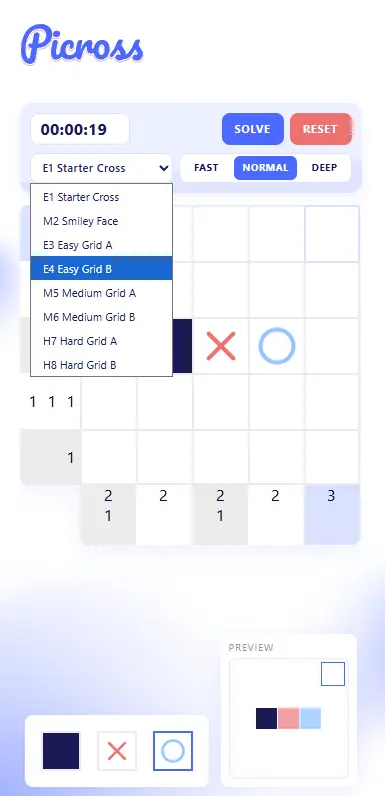
- Solve built-in puzzle packs from easy to hard
The board interactions are connected to reactive state updates so each action immediately reflects on hints and completion status.
2. Real-Time Validation Strategy
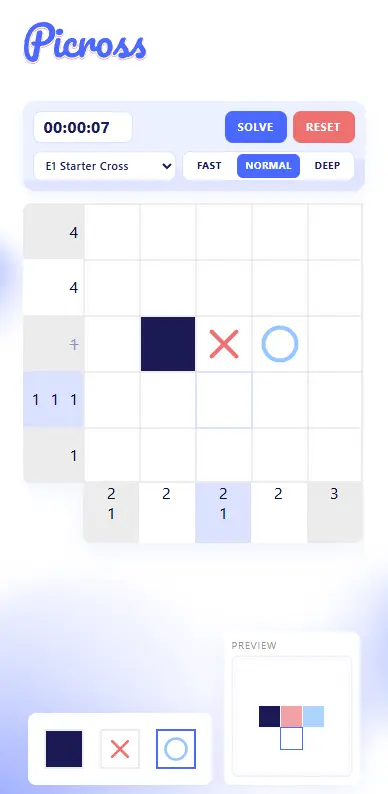
To keep interaction fast, validation does not recompute the entire grid on every move.
Instead, the logic:
- Recalculates only the affected row and column
- Derives contiguous run segments
- Compares runs against clue indices
- Marks matching clues as completed in real time
This approach improves runtime efficiency and keeps gameplay responsive even on larger puzzles.
3. Deterministic + Backtracking Solver
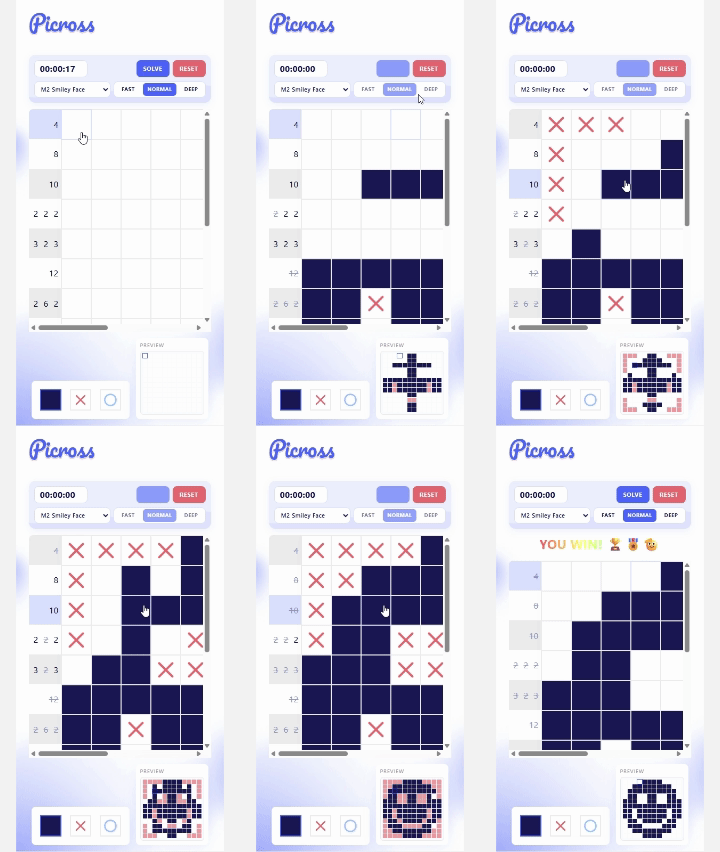
The solver runs in two phases:
- Deterministic constraint propagation for guaranteed moves
- Bounded DFS backtracking when deterministic progress stalls
Preset-based limits (iterations, nodes, timeout, step count) prevent runaway solving and keep the solver predictable for UI playback.
Technical Architecture
Frontend Layer
- Nuxt 3 + Vue 3 for app and routing structure
- Pinia stores for reactive puzzle and pointer state
- TypeScript for strict domain modeling
- UnoCSS for utility-driven styling
Engine & State Layer
@picross/coreas framework-independent solving engineusePuzzleStorefor puzzle grid, solver lifecycle, and win detectionusePointerStorefor cell focus and interaction modes- Shared puzzle types/data through monorepo packages
This separation keeps domain logic portable while preserving clear frontend boundaries.
My Responsibilities
- Designed the puzzle interaction and state architecture
- Implemented incremental row/column validation logic
- Built deterministic + bounded-backtracking solver flow
- Integrated solver playback and status feedback into UI
- Structured monorepo packages for reusable puzzle engine logic
- Maintained type-safe contracts across app and engine layers
Impact
This project demonstrates my ability to:
- Build game-like interactive web experiences with Vue/Nuxt
- Design performant reactive state workflows
- Integrate algorithmic problem-solving into frontend products
- Separate presentation from domain engine architecture
- Deliver maintainable, scalable code in a monorepo setup
Summary
Picross highlights a balance between frontend UX and algorithmic engineering, combining responsive gameplay with a controlled, explainable solver system suitable for production-scale architecture.